
Quick answer: hard money loans in Los Angeles
A hard money loan is a short-term loan secured by real estate and made by a private lender instead of a bank. Approval depends mainly on the property's value and your equity, not your tax returns, so it can fund in days instead of weeks. It is meant to be repaid within months, by selling the property or refinancing into a long-term loan.
- Rates in Los Angeles (October 2026): industry fix-and-flip loans run about 9.5% to 11%, usually interest-only, plus an upfront origination fee.[1]
- Who uses them: investors buying, flipping, building or refinancing non-owner-occupied property who need speed, or whose deal a bank won't do.
- City Capital Realty's terms: 9% interest-only, 2% origination fee, up to 70% of the property's value, $500,000 to $5,000,000, terms up to 12 months, funding in as little as 7 business days.[18]
- Who we are: City Capital Realty is a licensed California mortgage broker in Westwood, Los Angeles, serving borrowers since 2000 (DRE 00667328, NMLS 298861 / 729817).
Answer by Shawn Rabban, City Capital Realty. Updated October 24, 2026. Rates and fees are subject to change without notice. Subject to credit approval.
Hard money is having its biggest year on record, and Los Angeles is changing fast: a Fed rate hike, mortgage rates above 7%, a 29% jump in last-resort fire insurance, burned lots selling to investors, a mansion-tax vote and a new federal ban on Wall Street homebuying. This guide explains how hard money loans work, what they cost today, and how the stories everyone is talking about this week affect your next deal.
| Measure | Now | Context | Trend |
|---|---|---|---|
| City Capital Realty bridge rateUp to 70% of value, 2% fee [18] | 9% | Interest-only, up to 12 months | Steady |
| Industry fix-and-flip ratesApril 2026 [1] | 9.5–11% | Rental (DSCR) loans: about 7% | Steady |
| Private lending, Q1 2026U.S. originations [1] | $29.7B | Strongest first quarter on record | +4% |
| 30-year bank mortgageFreddie Mac, Oct 8 [14] | 7.40% | Highest since Nov 2023 | Rising |
| LA metro home flips, Q2 2026ATTOM [3] | 2,489 | Typical gross profit $130,000 | −26% |
The short version
- Hard money is booming. Private lenders made about $29.7 billion of loans in the first quarter of 2026, the best first quarter on record. Fix-and-flip lending rose 13%.[1]
- Rates held steady while banks got pricier. Typical fix-and-flip loans run 9.5% to 11%. The 30-year mortgage hit 7.40%.[1][14]
- LA flips earn the biggest dollars but thinner margins. The typical LA flip made $130,000 gross in Q2, more than twice the national figure, but on a 14.1% margin versus 21.5% nationally.[3][2]
- Six stories are moving LA real estate right now: the fire-insurance hike, burned-lot sales, the mansion tax vote, the Wall Street homebuying ban, rising foreclosures and the Fed. Each one is explained below with what it means for borrowers.
What a hard money loan is, in plain English
A hard money loan is a short-term loan secured by real estate, made by a private lender instead of a bank. The lender looks mainly at the property and how much equity you have in it, not at your tax returns or debt ratios. That is why approval can take days instead of weeks.
The trade-off is cost. Hard money carries a higher rate and an upfront fee, and it is meant to be repaid within months, by selling the property or refinancing into a long-term loan. Borrowers use it when speed or flexibility is worth more than the lowest possible rate.
At City Capital Realty, our published bridge terms are 9% interest, up to 70% of the property's value, a 2% origination fee and terms up to 12 months, with 4 guaranteed monthly payments.[18] We lend on non-owner-occupied property only: single-family homes, condos, townhouses and 2–4 unit buildings, and commercial property such as self-storage, office, medical, retail, industrial, warehouse and apartment buildings.
How the four main options compare in October 2026
| Hard money / bridge | Rental (DSCR) loan | 30-year bank mortgage | |
|---|---|---|---|
| Typical rate today | 9.5–11% (CCR: 9%) | About 7% | 7.40% |
| Time to fund | Days to about a week | A few weeks | Often 30 days or more |
| Approval based on | Property value and equity | The property's rent | Income, credit and debt ratios |
| Loan length | Months (CCR: up to 12) | Usually 30 years | 15–30 years |
| Property condition | Can be a fixer | Must be rentable | Must meet bank standards |
| Best for | Speed, rehab, buy-before-sell, bank said no | Holding a rental long term | Owner-occupied homes |
Rates: SFR Analytics/NPLA (April 2026) [1], Freddie Mac (October 8, 2026) [14], City Capital Realty [18].
2026: the biggest year yet for private lending
The numbers show a clear shift. According to SFR Analytics and the National Private Lenders Association, private lenders originated about $29.7 billion in the first quarter of 2026, up 4% from a year earlier and the strongest first quarter on record.[1] Inside that total, the mix changed:
Source: SFR Analytics and the National Private Lenders Association [1]
In plain terms, investors are borrowing to buy and fix properties, and borrowing less to hold rentals. That fits a market where long-term rates are high: it is easier to make the numbers work on a 6-to-12-month project than on a 30-year rental loan.
Pricing has stayed remarkably steady. In April 2026, fix-and-flip loans ran roughly 9.5% to 11%, and rental loans had a median rate of about 7%.[1] Over the same months, the Federal Reserve raised its benchmark rate to 3.75%–4.00% and the 30-year mortgage climbed to 7.40%.[15][14] We explain why bank rates rose in our full Fed rate hike analysis.[17]
- Hard money at 9%
- 30-year fixed mortgage
- The gap
Sources: Freddie Mac [14]; 9% is City Capital Realty's published bridge rate [18]. Hover or tap the chart to read values. Hard money loans are short-term and interest-only, so the comparison is a guide only.
In early 2021, a bank mortgage cost under 3%, so a 9% private loan cost more than six points extra. Today the difference is about 1.6 points. On a six-month loan, that gap is often smaller than the cost of losing a deal to a faster buyer.
What everyone in LA real estate is talking about right now
These are the stories dominating Los Angeles real estate conversations this month, and what each one means if you buy, sell, build or borrow.
-
Starts October 15
The FAIR Plan's 29.1% insurance hike
California's insurer of last resort, the FAIR Plan, is raising homeowners rates by an average of 29.1% starting October 15, 2026. It had asked for 35.8%. More than 675,000 policyholders are affected, and owners with high wildfire risk can see much larger increases on that part of their premium.[7]
29.1%Average FAIR Plan increase675,000+Policyholders affectedOct 15Effective date, 2026"It's definitely going to cause pain for some people."
What it means for borrowers: every lender requires insurance, and in hillside and canyon areas the premium is now a real line item in the deal. Get an insurance quote before you make an offer, not after. A property that can only be insured through the FAIR Plan may cost thousands more a year to hold, which changes both flip and rental math.
-
Rebuilding after the January 2025 fires
Burned lots are piling up, and investors are buying
Nearly two years after the Palisades and Eaton fires, the rebuild is the biggest construction story in Los Angeles. Permit data show more than 20,000 building permits across Pacific Palisades and Altadena in the year after the fires.[6] At the same time, many owners have decided to sell their land instead of rebuilding.
Vacant lots for sale exploded after the firesLots listed for sale in the three months ending November 30, 2024 and 2025. Source: Redfin, December 30, 2025 [5]
Redfin found investors bought about 40% of the lots that sold in Pacific Palisades and 44% in Altadena in the third quarter of 2025. Typical lot prices were about $1.6 million in the Palisades and $510,000 in Altadena. A Redfin agent described the result plainly: sellers "are starting to cut prices to attract offers."[5]

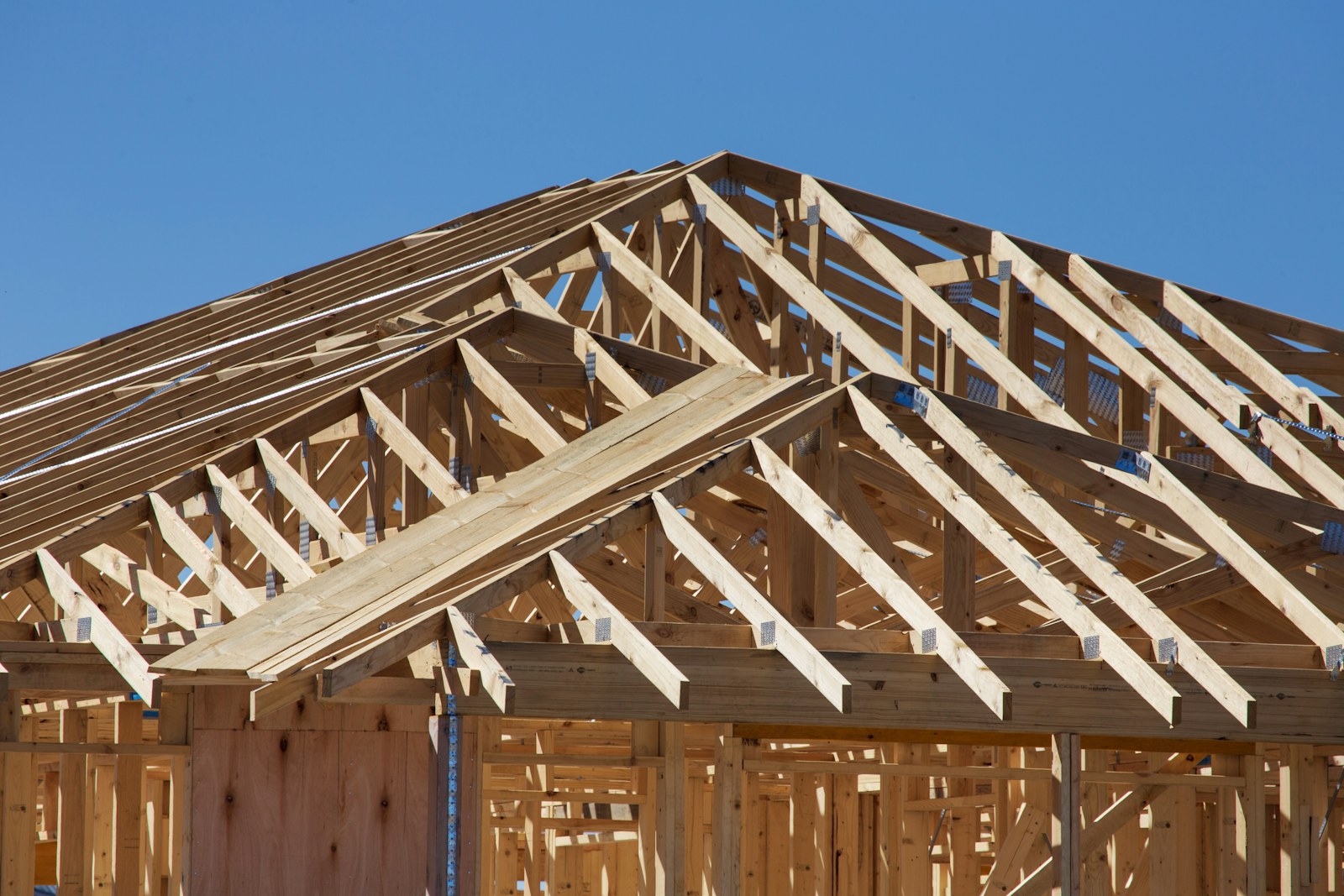
New construction is the core of the rebuild: every lot that sells still needs a house. Photo: Troy Mortier / Unsplash. What it means for borrowers: banks rarely lend on vacant, burned land or on a house that is only framed. That is where short-term private financing fits: buying a lot quickly, carrying it through permits, or bridging construction until a long-term loan is possible. New homes in burn areas must also meet stricter wildfire building rules, so budget for higher construction costs and longer timelines.
-
On the November 3 ballot
The "mansion tax" vote, and a $26 million price cut
Measure ULA, Los Angeles's tax on high-value sales, has raised more than $1.2 billion since 2023.[8] After the annual adjustment, it adds 4% to sales above $5.4 million and 5.5% to sales of $10.9 million or more, charged on the full price, not just the amount above the line.[9] A RAND study found the tax has reduced high-value sales and discouraged new housing construction.[10]
In July, the City Council shelved a broader rollback but voted 13–1 to put a narrow measure on the November ballot: it would exempt Pacific Palisades homeowners who sell within five years of the fire.[8]
Sale price (City of LA) Regular city + county transfer tax Measure ULA Total transfer tax $3,000,000 $16,800 $0 $16,800 $5,000,000 $28,000 $0 $28,000 $6,000,000 $33,600 $240,000 $273,600 $12,000,000 $67,200 $660,000 $727,200 Calculated from the published rates: City of LA $4.50 per $1,000 plus LA County $1.10 per $1,000, and Measure ULA's July 2026 thresholds [9]. Estimates only; ask your escrow officer for exact figures.
The top of the market is feeling it. This week a 22,000-square-foot spec mansion in the Hollywood Hills was relisted at $99 million, about 21% below its original $125 million asking price.[11]
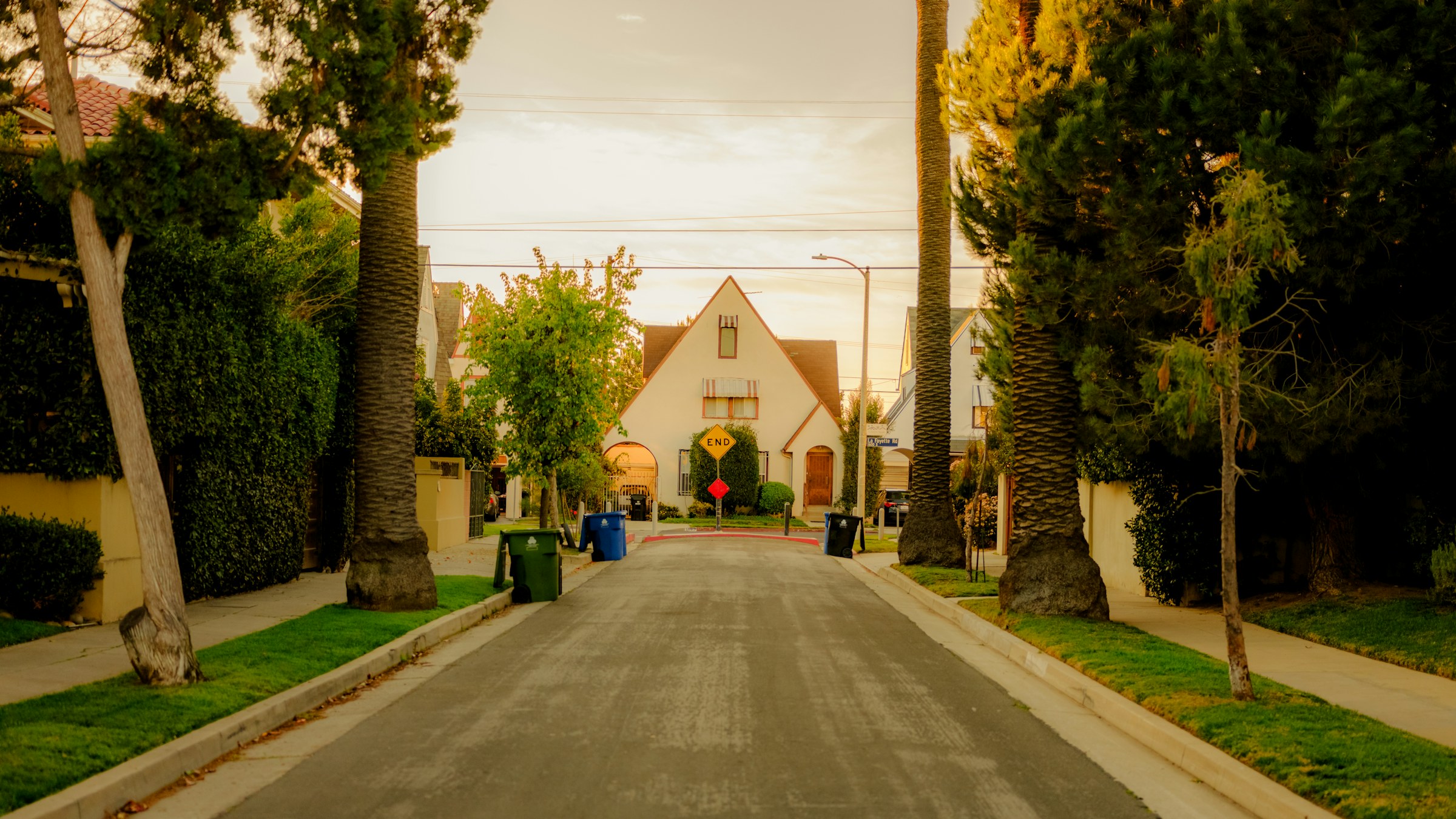
High-end homes face the steepest transfer taxes and the thinnest pool of buyers. Photo: John Fornander / Unsplash. What it means for borrowers: on a $6 million sale, Measure ULA costs about $240,000. Developers and flippers near the thresholds should price the tax into their exit, or plan resale prices just under $5.4 million. For sellers who need cash before a sale closes, a bridge loan against the property's equity can buy time to sell at the right price instead of the fast price.
-
Starts January 7, 2027
Wall Street is being shut out of buying houses
The 21st Century ROAD to Housing Act became law on July 11, 2026. Starting around January 7, 2027, large institutional investors, defined as those controlling 350 or more single-family homes, are barred from buying more existing single-family homes, with penalties of up to $1 million per violation or three times the purchase price.[12]
The law has important exceptions. It does not cover new construction or homes renovated and held for sale, and it does not apply to smaller investors at all.[12]
What it means for borrowers: if you own fewer than 350 homes, the law does not restrict you. In neighborhoods where large funds were bidding on houses, local investors and families may face less competition once the ban takes effect. Final federal rules are still being written, so watch for details before relying on any specific threshold.
-
Up 21% this year
Foreclosures are climbing again
ATTOM counted 227,548 U.S. properties with foreclosure filings in the first half of 2026, up 21% from a year earlier and 28% from 2024. Foreclosure starts rose 18% and bank repossessions 33%. California ranked third in the nation for foreclosure starts, with 16,040.[4]
U.S. properties with foreclosure filings, first half of each year2024 and 2025 are derived from ATTOM's reported percentage changes. Source: ATTOM midyear 2026 report, via HousingWire [4]
ATTOM's CEO Rob Barber described the market as "gradually returning to more typical patterns," and the numbers are still far below the 2008–2010 crisis.[4]
What it means for borrowers: owners behind on payments who still have equity often have more options than they think, including refinancing with a private lender to pay off the default, or bridging until a sale closes. Buyers will see more auctions and bank-owned properties, which almost always require fast, certain funding.
-
Next decision October 28
The Fed hiked, and the 50-year mortgage is off the table
The Federal Reserve raised its benchmark rate to 3.75%–4.00% on September 16, its first increase since 2023, and the 30-year mortgage reached 7.40%, the highest since November 2023.[15][14] Meanwhile, the much-discussed 50-year mortgage has been shelved; the head of the Federal Housing Finance Agency said the administration has "other priorities."[16]
What it means for borrowers: do not wait for a policy fix to make a deal work. Price every purchase at today's rates. If you need a long-term loan later, a short-term loan now can let you buy and improve the property, then refinance when it qualifies. Read our full breakdown of the Fed hike.

Fix and flip in Los Angeles: bigger checks, thinner margins
Flipping is still profitable in Los Angeles, but the math is tighter than it was. Nationally, ATTOM counted 77,991 flips in the second quarter of 2026, 6.2% of all home sales, with a typical gross profit of $60,526 and a typical time of 161 days from purchase to resale.[2]
"Flippers are still making money in most markets."
Sources: ATTOM [2]; ATTOM metro data via CalHomeNews [3]. Gross profit is resale price minus purchase price, before renovation, financing and selling costs.
Source: ATTOM [2]
Why are LA margins thinner? Higher purchase prices mean the same profit is a smaller percentage, and every month of holding costs more. Buyers also have more leverage: in September, 16.5% of Los Angeles sales had a price cut, and in August more than half of sales came with seller concessions, according to Redfin data.[3]
Flip profit calculator
Estimate a flip financed with a hard money loan at City Capital Realty's published terms: 9% interest-only, 2% origination fee, loan up to 70% of the purchase price. Renovation is assumed paid in cash.
- Loan (70% of purchase)
- –
- Cash you put in (down payment + renovation + fee)
- –
- Interest while you hold it
- –
- Origination fee (2%)
- –
- Selling costs (about 6% of resale)
- –
- Measure ULA (City of LA only)
- –
- Estimated profit
- –
- Return on your cash
- –
Estimate only. It leaves out purchase closing costs, insurance, property taxes and utilities during the project. Actual loan terms depend on the property and our review.
Apply for a fix-and-flip loanApartments: prices reset, buyers return
Los Angeles has the largest occupied apartment base in the country, about 1.12 million units. In the second quarter of 2026, according to Matthews, vacancy was 4.52%, average rent was $2,887 (up 0.8% from a year earlier), and the average cap rate had risen to 5.37%. The average price per unit, $308,551, is about 13.9% below the 2022 peak, and sales volume jumped 39.3% from a year earlier to $2.56 billion.[13]

What it means for borrowers: lower prices and higher cap rates make older buildings worth a second look. Bank financing on a building with vacancies or deferred maintenance is hard to get. A bridge loan can fund the purchase and the improvements, then you refinance once the building is leased and the income supports a long-term loan.
How to qualify for a hard money loan
Private lenders focus on the deal more than the borrower's paperwork. Expect to be asked about:
- The property and its value. This is the main basis for the loan. At City Capital Realty we lend up to 70% of value.[18]
- Your equity or down payment. You will need real estate to borrow against, or a meaningful down payment if you are buying.
- Your exit plan. How the loan gets repaid: a sale, a refinance, or another source. Lenders want a realistic timeline with room for delays.
- Your budget. For renovations, a scope of work and contractor bids show the plan is real.
- Insurance. Especially in fire areas, confirm you can insure the property before you commit.
Mistakes that cost LA investors money in 2026
- Using last year's resale prices. With price cuts and concessions common, underwrite to today's sales, not last year's peak.
- Ignoring the mansion tax. On a City of LA resale above $5.4 million, Measure ULA takes 4% of the full price.
- Assuming insurance is a formality. The FAIR Plan increase and insurer pullbacks can add thousands a year in carrying costs.
- Underestimating time. Permits, inspections and contractor schedules, especially in fire areas, often run longer than planned. Every extra month adds interest.
- No backup exit. If the sale is slow, can you refinance? Know your plan B before you close.
Key dates for Los Angeles real estate
California FAIR Plan's average 29.1% homeowners rate increase takes effect.[7]
Next Federal Reserve rate decision.
Election day: LA voters decide the Pacific Palisades exemption from Measure ULA.[8]
Final Fed meeting of the year; most officials expected another increase by year end.
Ban on large institutional investors buying single-family homes begins.[12]
Have a deal that can't wait for a bank?
City Capital Realty funds hard money and bridge loans across Los Angeles, with decisions based on the property. Tell us about your deal and we'll tell you quickly whether we can do it.
Frequently asked questions
What is a hard money loan?
A hard money loan is a short-term loan secured by real estate and made by a private lender instead of a bank. Approval is based mainly on the property's value and your equity, so it can fund in days. It is usually repaid within months by selling or refinancing the property.
What are hard money loan rates in Los Angeles right now?
How fast can a hard money loan close?
Because approval is based on the property, many hard money loans fund in about a week, compared with a month or more for a typical bank mortgage.
Can I get a hard money loan with bad credit?
Credit matters less than at a bank, but it still counts. Hard money lenders focus first on the property's value, location and your equity. At City Capital Realty we also review every borrower's net worth and look for a credit score of 720 or better.
Can I use a hard money loan to buy a burned lot or rebuild after the fires?
Short-term private loans are commonly used to buy land, carry it through permitting or bridge construction, which banks rarely finance. Terms depend on the property and your plan; contact us to discuss a specific lot.
Does the new Wall Street homebuying ban affect small investors?
No. It applies to investors controlling 350 or more single-family homes and starts around January 7, 2027.[12]
Does Measure ULA apply to my sale?
Only to sales in the City of Los Angeles above $5.4 million (4%) or $10.9 million (5.5%), based on the July 2026 thresholds.[9]

Shawn Rabban is the founder of City Capital Realty, a hard money lender in Westwood, Los Angeles. He also hosts a real estate show on 670 AM KIRN.
Sources
- SFR Analytics and the National Private Lenders Association, April 2026 Private Lending Market Update
- ATTOM, “Home Flipping Profits Continue Gradual Two-Year Decline” (Q2 2026)
- CalHomeNews, “Sellers bend, flippers fold” (ATTOM metro data and Redfin), October 10, 2026
- HousingWire, ATTOM midyear 2026 U.S. foreclosure report
- Redfin, “Vacant Lots for Sale Are Piling Up After the L.A. Fires”, December 30, 2025
- Shovels, Los Angeles wildfire rebuild permit data
- KQED, “California FAIR Plan Announces 29.1% Rate Hike for Homeowners This Fall”
- LAist, City Council sends narrow “mansion tax” measure to the November ballot, July 1, 2026
- Hanson Bridgett, Measure ULA ordinance update (2026 thresholds)
- RAND Corporation, The Effects of the Measure ULA Transfer Tax on Economic Development and Municipal Finances in Los Angeles
- The Real Deal, Hollywood Hills spec mansion relisted below $100 million, October 14, 2026
- Mayer Brown, Limits on large institutional investors buying single-family homes become law (ROAD to Housing Act)
- Matthews, Los Angeles Multifamily Market Report Q2 2026
- Freddie Mac, Primary Mortgage Market Survey
- Federal Reserve, FOMC statement, September 16, 2026
- The Hill, Pulte says White House moving away from 50-year mortgage plan
- City Capital Realty, “The Fed Raised Rates Again: What It Means for LA Real Estate and Hard Money Loans”
- City Capital Realty, Bridge loan terms
This article is for general information only and is not financial, investment, tax or legal advice. Figures are as of the dates shown and change often. Loan terms are subject to property review and approval.